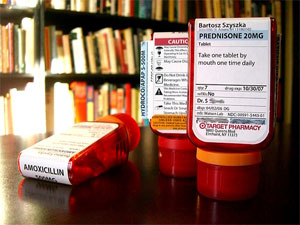
The real cost of a Medicare Part D plan depends not only on the premium, but also on the availability of the drugs you need, your additional out-of-pocket costs, and how convenient it is to obtain your medications. [Read more…]

508.757.3800
Have a question? Give us a call.
Schedule Your Consultation
Would you like to meet with us?
by Kristina

The real cost of a Medicare Part D plan depends not only on the premium, but also on the availability of the drugs you need, your additional out-of-pocket costs, and how convenient it is to obtain your medications. [Read more…]
by Kristina
You may have a vision for your retirement plan, but does your spouse share that vision?
A recent study by Fidelity Investments shows that many couples are not in accord about their retirement plan. For example, one-third of couples approaching retirement disagree about or don’t know where they are going to live after they retire, and 62 percent don’t agree on their expected retirement ages.
Here are some important things to discuss with your spouse as you get ready retire and develop a retirement plan:
1. When to stop working. Many factors go into a decision about when to retire, including job enjoyment and financial needs. But you’ll also want to include in your retirement plan how to maximize your Social Security benefits. There are a number of different strategies for when each spouse should file for various types of benefits, and couples who do it wrong can leave a lot of money on the table.
2. Finances. Both spouses need to understand their financial situation to develop a retirement plan. The survey found that very often, one spouse is much less involved in planning retirement finances than the other, and might not be ready to manage financial affairs should the need arise.
3. Lifestyle. Do you want to travel? Volunteer? Or relax on a beach somewhere? It’s important to have a conversation about your hopes and dreams for retirement. You can start by creating individual wish lists and then comparing them when developing your retirement plan.
4. Health care. Make sure you and your spouse have adequate health care coverage, either from Medicare or an employer-based plan. You’ll also need to understand the rules regarding Medicare coverage and when to sign up for it.
5. Long-term care. Unfortunately, one or both spouses will likely need some type of long-term care at some point. There are things you can do to make it easier on yourself if the need arises. Talk to your elder law attorney about putting a plan together – doing it early will save lots of headaches and expense later.
Hopefully your respective visions for your post-career life are similar. When you’ve taken these steps, it’s now time to put your dream plans in motion. To ensure that your long-term care plans for retirement are met, it’s vital that you speak with a qualified elder law and estate planning attorney so your wishes are always met.
Contact us when you are ready to make your retirement plan a reality.
by Kristina
Medicaid, or MassHealth as it is referred to in Massachusetts, is an avenue available for funding long-term nursing home care. To qualify, you must meet asset thresholds that many elders exceed. Additionally there are income requirements for MassHealth/Mediciad. Adequate understanding of MassHealth/Medicaid law and proper strategizing is a critical component of any plan for the future. With the proper planning of an elder-law attorney, you can protect your property, spouse, and assets. [Read more…]
by Kristina
A three-day hospitalization often serves as a gateway for a senior citizen’s transition into a skilled care facility. When the patient is discharged to a skilled care facility for occupational, physical, or speech therapy, the patient’s health insurance (Medicare) will continue to finance treatment for up to 100 days per stay (as long as the person continues to benefit from rehab). Medicare coverage ultimately ends, and when it does, the patient must pay from income, savings, long-term care insurance, Medicaid, or a combination of these resources. [Read more…]
by Kristina
Most everyone would say that they want to be independent and remain in their own homes as long as possible. This sense of autonomy can be kept in place longer than ever before due to medical advances, assistive devices, and in-home care provided by family members and private caretakers. However, what happens when an elder can no longer remain safely in their home and an adult child is trying to get them the help they need?
Esther is 89 years old. She has lived alone since the death of her husband 23 years ago. She gave up driving two years ago, but is regularly visited by her children and grandchildren, who take care of errands or drive her to handle things herself. Lately, she has been rather unsteady on her feet. 
by Kristina
I’ve written about Pet Trusts in a previous blog. They have many benefits for pet owners concerned about what would happen should their animal outlive them. However, until recently, Pet Trusts were not available in Massachusetts. New Massachusetts legislation took effect on April 7th, 2011, bringing this important Estate Planning tool to the Bay State. The remainder of this week’s blog was edited from an article written by Attorney Gina Barry of Bacon Wilson, P.C. in Springfield. [Read more…]
by Kristina
The Safe Driving Law has officially become effective in Massachusetts as of Sept. 30, 2010. Massachusetts now joins an increasingly growing number of states that ban texting while driving. However, a major part of this bill is also targeted at elderly drivers who are over the age of 75.
On June 2, 2009, a 93-year-old driver hurt a mother and toddler in a stroller when he drove his car into a Danvers Wal-Mart. He stepped on the gas pedal because he thought he was stepping on the brake. The next day, a 73-year-old Middleboro driver accidentally drove her minivan into a crowd of people attending a Vietnam War Memorial in Plymouth. As a result, eight people went to the hospital. Read this blog for more information. In an effort to reduce the number of accidents involving elderly drivers, Massachusetts legislators passed the new Safe Driving Law. [Read more…]
by Kristina
There are several websites that offer customized, do-it-yourself wills and other estate planning documents. These computer-based services appear to offer the consumer a cost-effective and convenient alternative to visiting an Estate Planning or Elder Law attorney. Or do they? Is online estate planning worth the convenience and initial savings? How do the documents created compare to those that a qualified attorney would produce? [Read more…]
by Kristina
Some people think that Elder Law and Estate Planning attorneys are only useful further down the road. They think, “I’m healthy. I don’t need to worry about those things now.” Even while you are healthy, there is one document that everyone over the age of 18 should have in place: a Health Care Proxy (HCP). A health care proxy is necessary to ensure that someone, a health care agent, will be available to make medical decisions for you if you are unable to make them on your own because you are incapacitated. Currently, in Worcester County, another form is also worth considering: the Medical Orders for Life-Sustaining Treatment (MOLST) form. This medical order works with the HCP to inform your health care agent and your doctors what you actually want to happen in various circumstances. [Read more…]
by Kristina
Not long ago, I posted a blog on gift transfers and their affect on qualification for MassHealth (Medicaid) for an institutionalized individual. Generally, transferring assets to dispose of property so that you qualify for MassHealth will not actually help you qualify because the state imposes a five-year “look-back” period, in which those assets are counted and used to assess eligibility for MassHealth. Fortunately, there are some exceptions to the general rule. [Read more…]
Have a question? Give us a call.
508.757.3800
Want to leave us a review?
Review Vickstrom Law
